
Single and want to dance? here is what you need to know
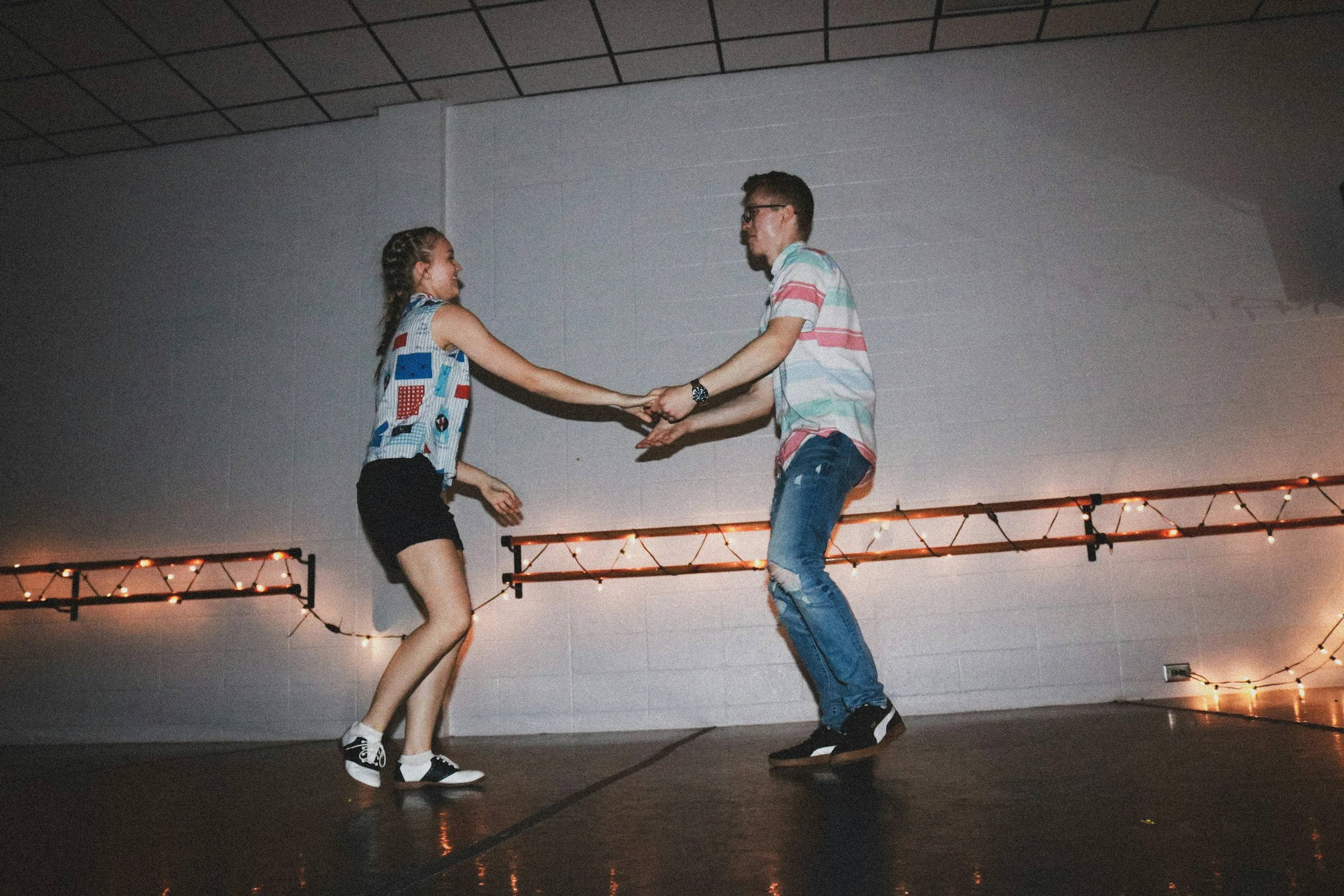
"I'd love to learn ballroom dancing, but I don't have a partner."
I hear this all the time. In fact, it's probably the number one reason people delay starting dance lessons. There's a common misconception that because ballroom dancing involves two people, you need to arrive at the studio with a partner already in tow. Here's the truth: you absolutely do not need a partner to learn ballroom dancing.
In fact, coming to lessons solo might just be the best decision you'll ever make. Let me explain why.
The Reality: Most Dancers Start Alone
When you picture a ballroom dance studio, you might imagine the room filled with perfectly matched couples who've been dancing together for years. The reality? Studios are typically split fairly evenly between singles and couples. Many of my most dedicated students started their journey without a partner—and they're thriving.
You're not going to be the awkward single person in a sea of couples. You're going to be one of many people who decided to pursue something they're interested in, partner or no partner. That takes courage, and it's something to be proud of.
How Private Lessons Work for Singles
At Helle Dancing, private lessons are one of the most popular options—and they're absolutely perfect for single dancers. Here's what happens:
During your lesson, I'm your partner. That's it. That's the solution. You book your private lesson time, and I dance with you for the full 50 minutes. We work on your technique, your timing, your musicality, and your steps. You get personalized attention focused entirely on your goals and your progress.
The beauty of private lessons for singles is that you can focus completely on your own development without worrying about coordinating schedules with another person or compromising on what to learn. Want to master the Waltz? We'll work on that. Interested in Salsa? Let's do it. Preparing for a friend's wedding where you might get pulled onto the dance floor? I've got you covered.
Your first step: I always recommend starting with our free 15-minute video consultation. We'll discuss your goals, experience level, and any concerns you have. No pressure, no commitment—just a friendly conversation about whether dance lessons are right for you. If you decide to move forward, you can book an introductory lesson ($60) to see how you like it.
Actually, Learning Alone Has Major Advantages
Here's something that might surprise you: learning to dance without a permanent partner can actually make you a better dancer.
When you're learning with the same partner every time, you naturally adjust to their specific height, hand pressure, lead style, and quirks. You become great at dancing with that person. But ballroom dancing is ultimately a social activity. The goal isn't just to dance with one person—it's to be able to dance with anyone at a wedding, social event, or dance party.
By learning with different partners (your instructor in private lessons, and various dancers at social dance events), you become more versatile and adaptable. You learn to:
Quickly adjust to different heights and frames
Read and respond to various lead and follow styles
Dance confidently with anyone, regardless of their experience level
Develop your own solid technique rather than compensating for a partner's habits
Think of it like learning a language. If you only ever practice with one person, you get really good at understanding thatperson. But when you practice with many different speakers, you develop the ability to understand and communicate with anyone. The same principle applies to dance.
What About Social Dancing?
"But won't I need a partner to go out social dancing?"
Absolutely not. The entire point of social dancing is dancing with many different people throughout the evening. At social dances, it's completely normal—expected, even—to ask someone to dance, share a song together, and then each find new partners for the next dance.
In fact, social dancers who come as singles are often in high demand because they're available to dance with anyone. Couples who come together sometimes stay together all night, but singles keep the social energy flowing by mixing with everyone in the room.
Yes, asking someone to dance can feel intimidating at first (I get it), but the ballroom community is genuinely welcoming. A simple "Would you like to dance?" is all it takes. And here's a secret: other people at social dances are hoping someone will ask them to dance too. Everyone wins when people are brave enough to ask.
The Confidence Factor
One of the most profound benefits of learning to dance as a single person is what it does for your confidence. When you walk into that first lesson by yourself, you're already demonstrating courage. You're saying, "I'm not going to let the lack of a partner stop me from pursuing something I want."
That confidence compounds with every lesson. You learn to move your body with intention and grace. You discover you can master complex patterns and timing. You practice the vulnerable act of partnering with different people. And gradually, something shifts. The person who walks into their tenth lesson is not the same person who nervously arrived at that first one.
Many of my students tell me that the confidence they gain on the dance floor carries over into every other area of their lives. They're more comfortable speaking up in meetings, more willing to strike up conversations at social events, and more confident in their own skin. Dance gives you a whole new way of moving through the world.
Yes, You Might Meet Someone
Let's address the elephant in the room: yes, dance studios can be places where people meet romantic partners. It happens. In fact, it happens a lot. When you're sharing an intimate activity like partner dancing, connecting with others who share your interests, and doing something that naturally builds attraction (physical coordination, music, touch), romance can certainly blossom.
But that shouldn't be your primary goal. Come to dance because you want to dance. Come because you're curious about movement and music. Come because you want to challenge yourself or try something new. Come because you saw someone Waltz once and thought, "I want to do that."
If you happen to meet someone special along the way? That's a bonus. But you'll get so much out of dancing regardless—the health benefits, the mental stimulation, the social connections, the pure joy of movement—that it's absolutely worth doing for its own sake.
What to Expect in Your First Lesson
Still nervous? Let me walk you through what actually happens:
Before the lesson: You'll schedule a free 15-minute video consultation with me. We'll chat about your experience, what you're hoping to achieve, and what style of dance interests you. This is low-pressure and conversational—just two people talking about dance.
Your first lesson: You'll come to the studio and we'll start with the absolute basics. I'll teach you how to find the rhythm in the music, proper posture and frame, and simple step patterns. We'll dance together, with me leading you through everything step by step. You'll make mistakes (everyone does), we'll laugh about them, and you'll learn. That's it.
What you won't experience: Judgment, pressure, or being forced into anything uncomfortable. You won't be expected to already know anything. You won't be pushed to sign up for a massive package or commit to a competition team (unless that's your goal). You'll just learn to dance, at your own pace, in a supportive environment.
Other Singles Who've Taken the Leap
I've taught countless students who started without a partner, and their stories are remarkably similar:
They were nervous at first. They worried about looking foolish or being the only single person. But within the first lesson or two, those concerns melted away. They realized everyone else in the room was focused on their own learning, not judging anyone else. They discovered that dancing was simply fun, regardless of relationship status.
Many continued for years, developing into skilled dancers who light up the social dance floor. Some eventually found dance partners (romantic or platonic) to compete or perform with. Others remained happily solo, enjoying the freedom to dance with whoever they wanted, whenever they wanted.
All of them were glad they didn't let the lack of a partner stop them from starting.
The Bottom Line
You don't need a romantic partner, a dance partner, or any partner at all to start ballroom dancing. What you need is curiosity, a willingness to try something new, and maybe a little courage to walk into that first lesson alone.
Ballroom dancing is for everyone—coupled or single, young or old, experienced or brand new. It's a skill you can learn, a hobby you can enjoy, a form of exercise that doesn't feel like exercise, and a gateway to a whole community of people who share your interests.
So if you've been holding back because you don't have a partner, consider this your permission to start anyway. Book that free consultation. Show up for that first lesson. Give yourself the gift of dance, regardless of your relationship status.
Because here's what I've learned from years of teaching: the only thing you really need to dance is the desire to move.
Ready to get started? Schedule your free 15-minute consultation and let's talk about your dance goals. No partner required.